
Cycling
The Impact of Aerodynamics in Amateur Cycling
PUBLISHED: 2026-08-08|READ TIME: 6 MINS|AUTHOR: FRANCESCO CASTALDI
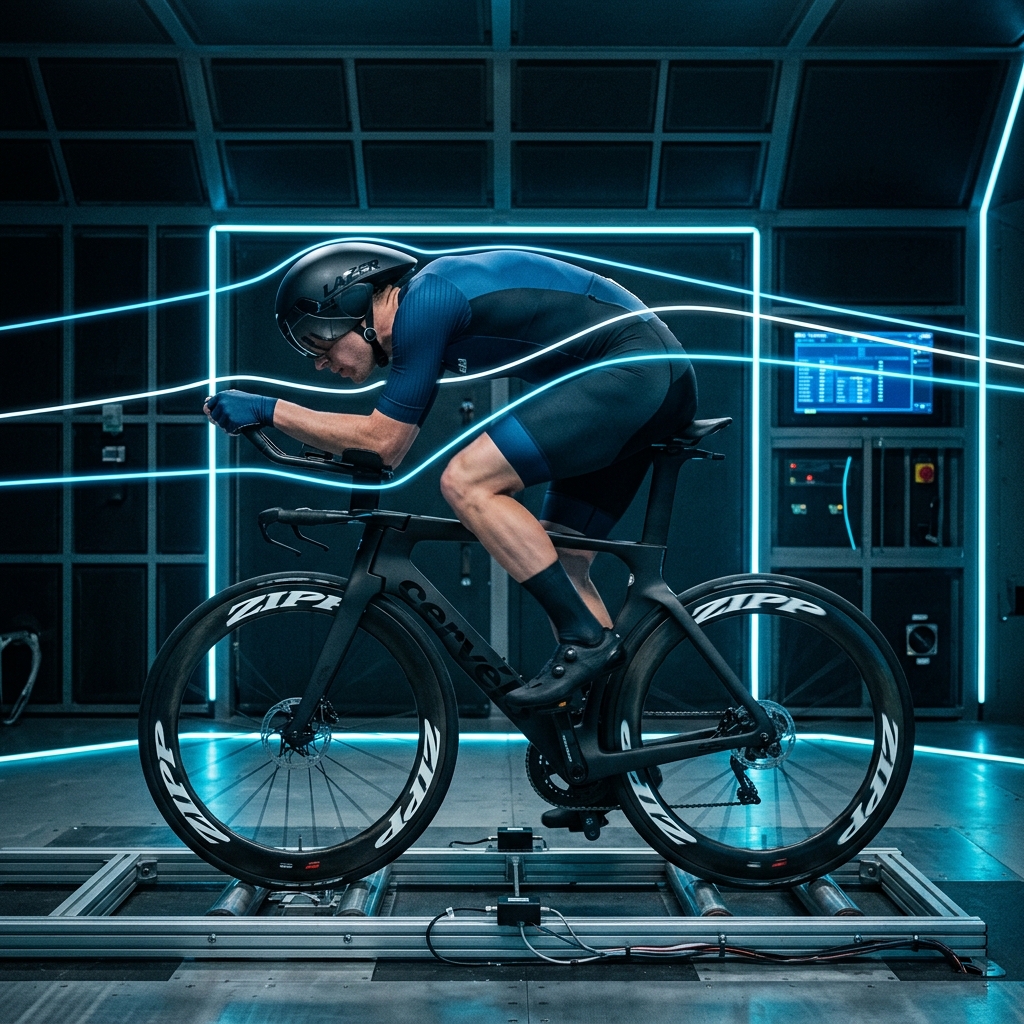
FIGURE: Aerodynamic Cycling Position
The Wall of Air
Beyond 15 km/h, the predominant force a cyclist must defeat is not gravity or mechanical friction, but aerodynamic resistance (drag). Many amateurs spend thousands of euros on aero frames, but forget that the bicycle is only a fraction of the problem.
Who Generates the Resistance?
| Component | Percentage of Total Aerodynamic Resistance (Drag) |
|---|---|
| Cyclist's Body | ~80% |
| Bicycle Frame | ~8% |
| Wheels | ~8% |
| Helmet and Clothing | ~4% |
[ TIP ]
Spending 3000€ on an "Aero" frame saves fewer Watts than lowering your torso, bending your elbows to 90 degrees, and wearing a tight jersey.
Does it matter at low speeds?
There is a false myth that aerodynamics only matters if you are a pro traveling at 45 km/h. Physical reality (the drag equation) says that the power required to overcome air increases with the *cube* of speed. However, even at 28 km/h, 80% of your effort is used to move air. A slower cyclist will spend *more time* on the course exposed to the wind, so the total time savings (in minutes) with an aero setup is often greater for the amateur than for the professional!