
Cycling
Chain Replacement: Wear, Measurement and False Myths
PUBLISHED: 2026-08-05|READ TIME: 4 MINS|AUTHOR: FRANCESCO CASTALDI
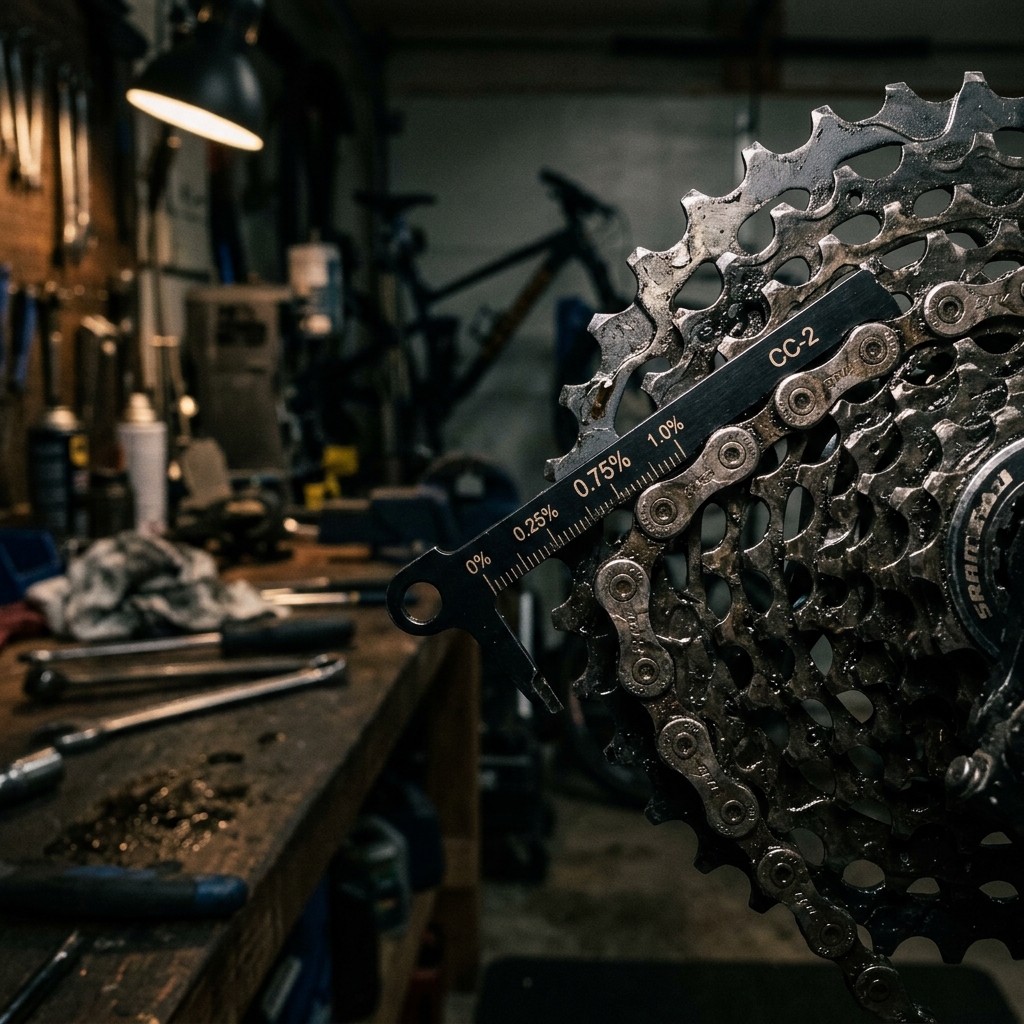
FIGURE: Bicycle Chain Measurement
The Silent Killer of the Drivetrain
The bicycle chain does not "stretch" because the metal deforms under the power of your legs. It stretches because the tiny inner rollers wear out due to friction and dirt, increasing the distance between links.
If you keep pedaling with a chain worn past its limit, the misaligned rollers will start grinding the teeth of your cassette and chainrings to match the new length.
[ WARNING ]
Changing a chain costs 30€. Changing a worn cassette and two chainrings costs over 250€. Do not ignore chain wear!
How to Measure Wear
The only truly reliable tool is the chain checker. Insert it between the links:
| Tolerance (Elongation) | Recommended Action |
|---|---|
| < 0.5% | Perfect, keep riding and lubricating. |
| 0.5% - 0.75% | Replace the chain immediately. The cassette is still safe. |
| > 0.75% | Too late. If you put a new chain on now, it will skip on the old cogs. You must change the cassette too. |
Avoid false myths: never wash the chain with aggressive degreasers (like standard WD-40 or gasoline) soaking them for hours, because they remove the factory grease inside the rollers, drastically shortening chain life. Use specific biodegradable degreasers and always re-lubricate.