
Cycling
Bike Fitting: Why Millimeters Make the Difference in the Saddle
PUBLISHED: 2026-08-04|READ TIME: 5 MINS|AUTHOR: FRANCESCO CASTALDI
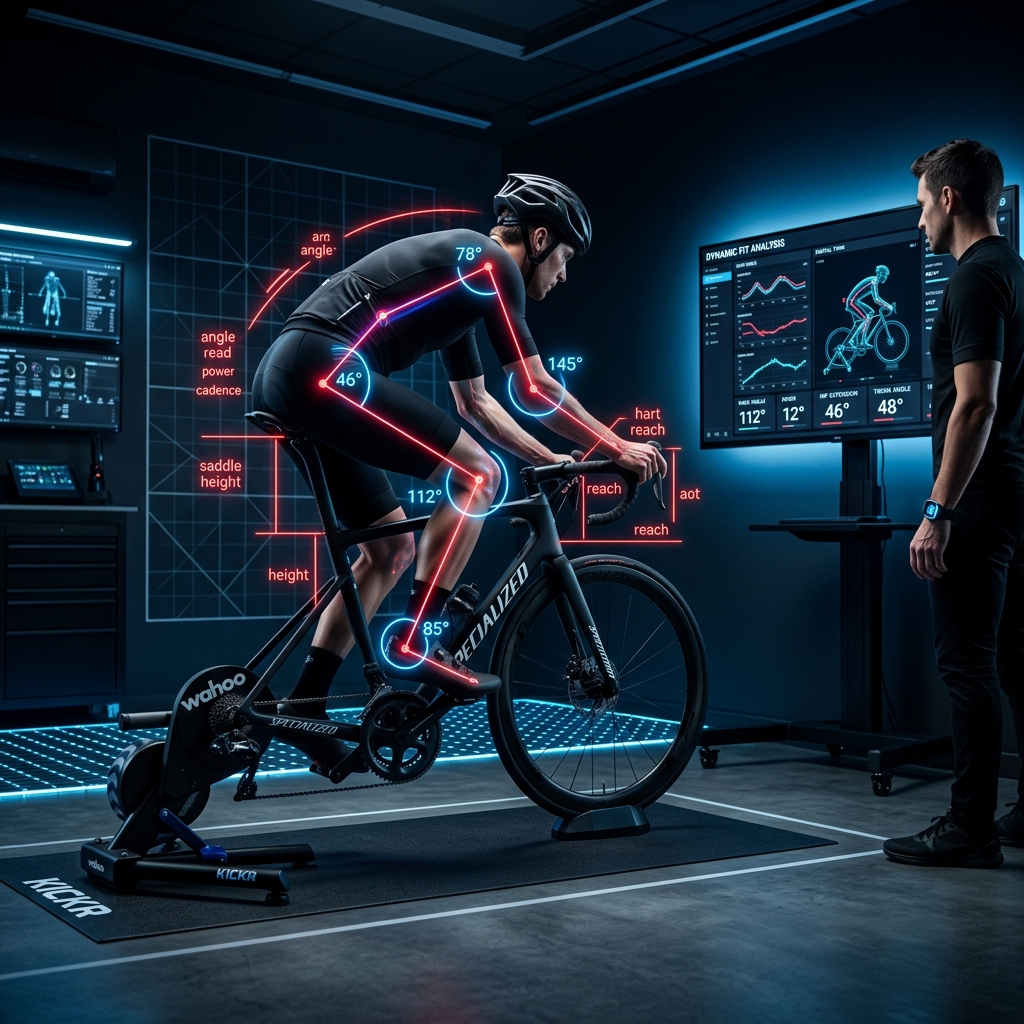
FIGURE: Bike Fitting Process
The Perfect Machine, the Human Engine
The bicycle is a symmetrical machine. The human body almost never is. We have one leg imperceptibly longer than the other, rotated pelvises, and asymmetrical flexibility. Bike Fitting is the science of adapting the machine to the body, not vice versa.
Many cyclists focus on reducing the weight of the bike, ignoring that a saddle 5 millimeters too high wastes more energy than an ultra-light carbon frame saves, besides causing knee tendinitis.
The 3 Points of Contact
Fitting focuses on the three interface points between man and machine:
| Contact Point | Crucial Adjustment | Typical Problem if Incorrect |
|---|---|---|
| Saddle | Height, setback, tilt | Lower back pain, genital numbness, patellar tendinitis |
| Handlebar | Reach, Drop | Neck pain, hand numbness |
| Pedals / Cleats | Fore-aft position, rotation, float | Iliotibial band syndrome, foot pain |
[ TIP ]
If you suffer from numbness in your hands or feet after 2 hours in the saddle, don't buy thicker gloves or wider shoes. Get a professional biomechanical bike fitting.
Modern fitting uses high-frequency cameras (3D motion capture) to measure dynamic joint angles under strain. It is the best investment (around 150-200€) a cyclist can make for their own comfort and performance.