
Tire Pressure: Rolling Resistance vs Comfort
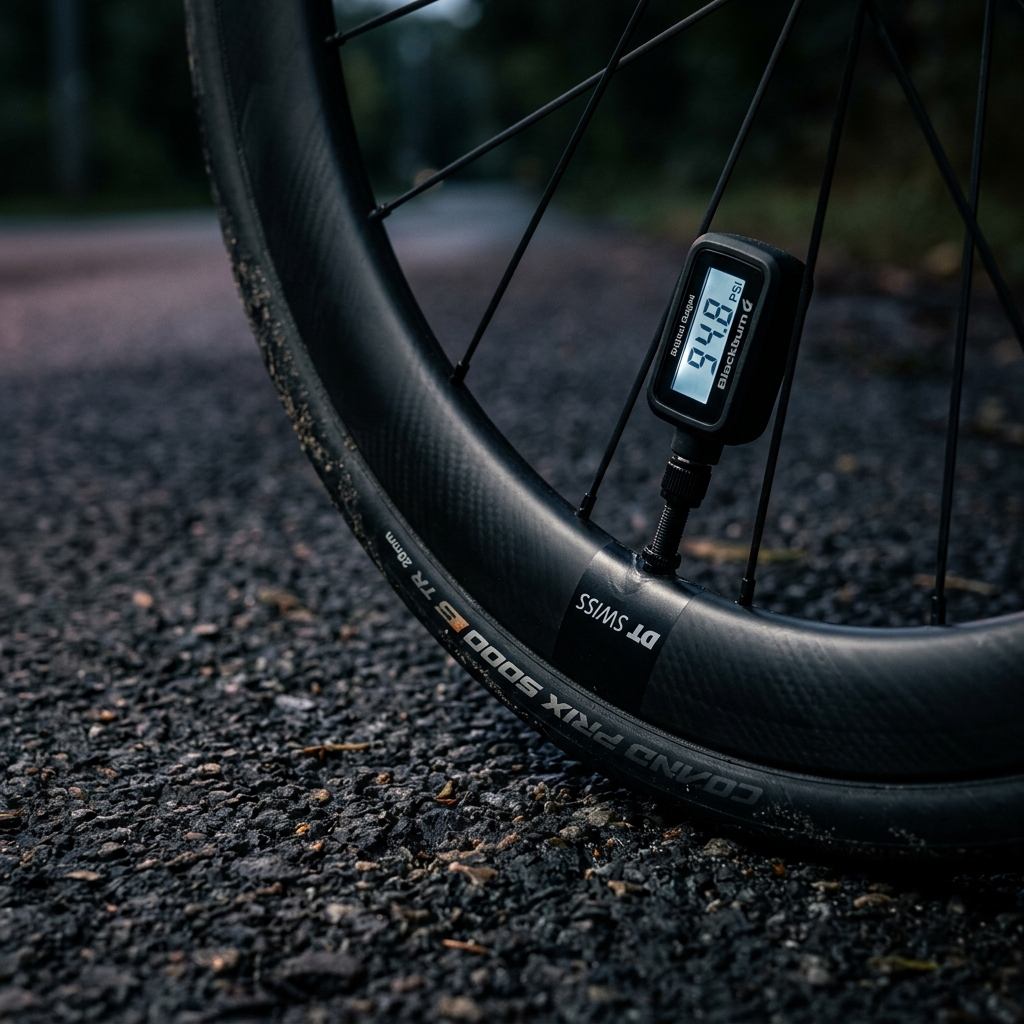
The Myth of 8 Bar (120 PSI)
For decades, cyclists pumped their ultra-thin 23mm tires to frightening pressures, convinced that "the harder, the faster". On a perfectly smooth wooden velodrome, physics confirms this theory.
But real-world roads are full of cracks, rough asphalt, and potholes.
Impedance Losses
When a tire is inflated to 8 bar, it's a rock. Every time it hits a small asphalt imperfection, the bicycle (and your body) are pushed upwards. This micro-bounce dissipates forward energy by transforming it into vertical energy. In physics, this is called *impedance*.
If the pressure is lower instead (e.g., 5.5 bar on a 28mm tire), the tire deforms, absorbing the obstacle. The bike continues to move forward in a straight line without bouncing.
| Pressure / Width | Surface | Efficiency (Rolling Resistance) | Comfort |
|---|---|---|---|
| 23mm at 8.0 Bar | Smooth track | Excellent | Terrible |
| 23mm at 8.0 Bar | Rough asphalt | Terrible (High impedance losses) | Terrible |
| 28mm at 5.5 Bar | Rough asphalt | Excellent (Absorbs vibrations) | Superior |
Embrace comfort: wider tires at lower pressures are mathematically faster in the real world.