
Cycling
Gravel vs Road Bike: Geometry Analysis
PUBLISHED: 2026-07-30|READ TIME: 4 MINS|AUTHOR: FRANCESCO CASTALDI
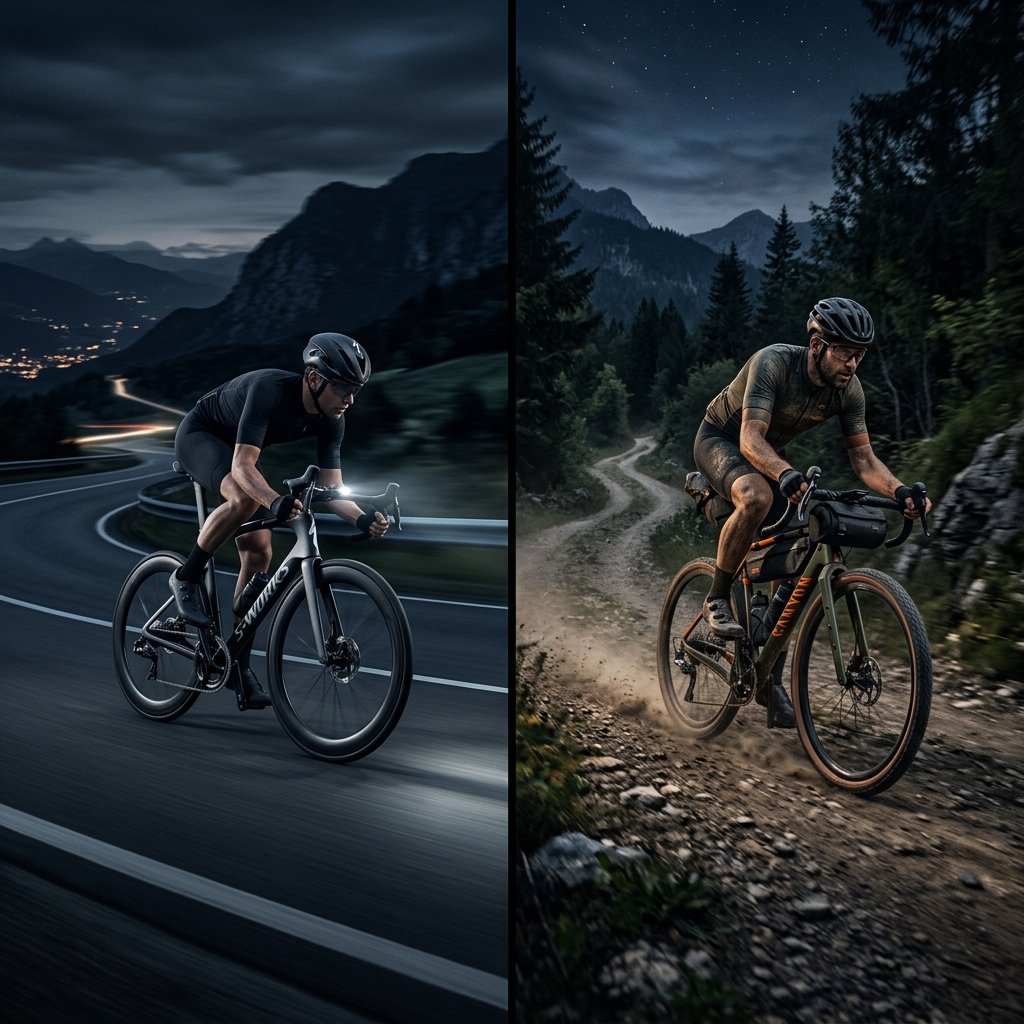
FIGURE: Gravel and Road Bike Comparison
The "They Do the Same Thing" Illusion
At first glance, a gravel bike looks like a road bike with knobby tires. Many think that mounting 30mm tires on a gravel bike gets you a pure road bike. But the engineering reality is very different, and it's all hidden in the frame numbers.
The Numbers That Matter
| Measurement | Road Bike | Gravel Bike | Practical Effect |
|---|---|---|---|
| Wheelbase | Short (~990mm) | Long (~1030mm) | Gravel is much more stable downhill and off-road, but less responsive in sprints. |
| Head Angle | Steep (73-74°) | Slack (70-71°) | A slack steering angle makes the gravel less twitchy and more predictable over obstacles. |
| Bottom Bracket | High | Low (More Drop) | A lower center of gravity increases cornering stability. |
[ NOTE ]
Trail (the distance between the wheel contact patch and the steering axis) is the real secret. High trail on a gravel bike prevents the wheel from suddenly "tucking" in mud or gravel.
If you are looking for the adrenaline of a 50 km/h sprint or twitchy accelerations on climbs, the road bike remains unbeatable. If you seek adventure, comfort, and the ability to get lost in the woods without risking your life at every turn, the relaxed geometry of a gravel bike is perfect.